     |
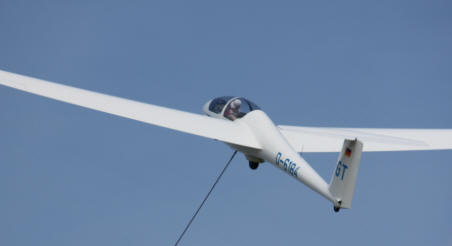
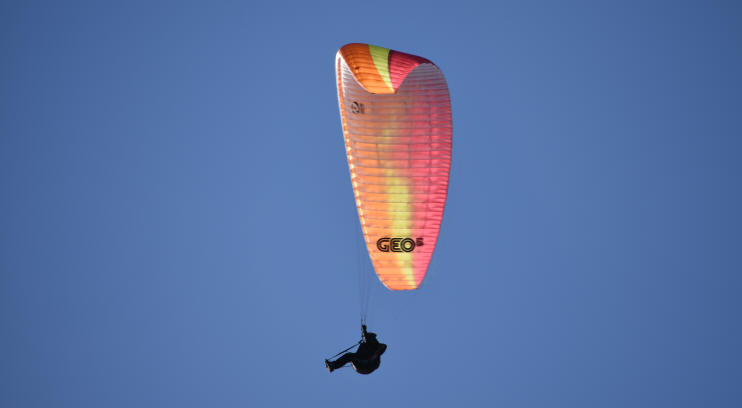
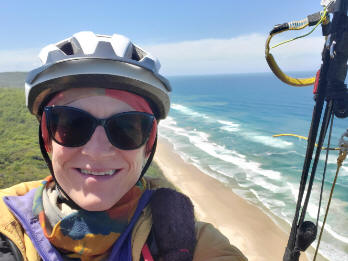
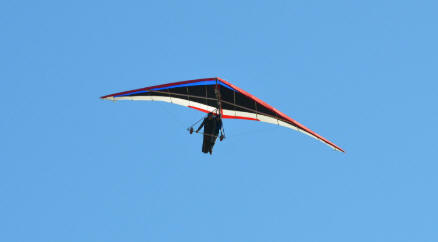
Aviation Among other things, I am an aviation enthusiast. While I was studying at the University of Bielefeld, I began flying sailplanes at Bielefeld-Oerlinghausen (EDLO). After moving to Australia in 2007, I took up paragliding and have since become actively involved in the sport and its governance. I currently serve as Secretary of the Toowoomba-based club Wicked Wings (since 2020), as a Senior Safety Officer for Australia (since 2024), and as President of the S-QLD regional association, Queensland Sports Aviators (QSA; since 2024). My work in aviation is closely informed by my research on attention, distraction, and inattentional blindness. These principles are integrated into safety training workshops that I regularly deliver for new and continuing Safety Officers, as well as for broader aviation audiences. Below you will find a selection of materials and resources for aviation enthusiasts and researchers. Enjoy!
Research 1. Alternatives to the Transponder Mandate: Tracklog Study This study is conducted in collaboration with Tim Bromhead, the owner of the puretrack.io platform. The aim of the study is to determine the accuracy of tracking devices currently used by recreational pilots (including XCtrack, Skylines, inReach, FLARM, Spot, etc.) by comparing the tracklog files from different devices or platforms to each other and to ADS-B devices (e.g., transponder, SkyEcho). Drones operated beyond visual line of sight (BVLOS) are currently using ADS-B technology to avoid other traffic. The results of our study will reveal whether currently used tracking devices are precise enough to be used instead of ADS-B in drones, for the purpose of collision avoidance, avoiding a nation-wide transponder mandate for recreational pilots. We are seeking participants for this study. If you are flying with multiple tracking devices and would be happy for us to use your anonymised data for the purpose of this study, please read the information sheet and provide your informed consent using this link:
https://uniofqueensland.syd1.qualtrics.com/jfe/form/SV_aaxOqTB1im5MSA6
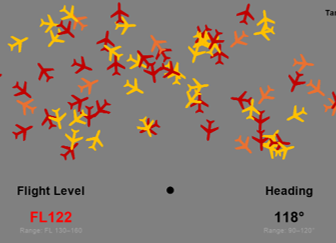
Since the introduction of CASR Part 91 in December 2021, pilots operating in Class G airspace above 5,000 ft AMSL are generally required to carry a VHF radio, maintain a listening watch on the appropriate area frequency, and make radio broadcasts when required. In this study, we investigated whether monitoring VHF radio communications or making radio calls interferes with attention, perception, and decision-making. Participants completed two visual tasks under four conditions: (1) no radio communications, (2) VHF radio calls that could be ignored, (3) VHF radio calls that had to be monitored attentively, and (4) VHF radio calls that required participants to respond by reporting their intentions. In the first task (left), participants completed a foraging task in which they clicked on all orange aircraft moving around the display while simultaneously monitoring their own flight level and heading and correcting them whenever they drifted outside a predefined tolerance range. We measured how long it took participants to notice that one of the values had drifted outside the range, by monitoring particpants' eye momvements. In the second task (right), participants completed a change blindness task in which two visual scenes containing two to four differences alternated repeatedly. Participants had to identify the differences between the scenes - a task that relies heavily on visual attention and working memory - and we measured the number of changes they were able to detect in the four conditions (with and without VHF radio calls).
Foraging: Collect the orange planes Change Blindness: Find missing objects
The results showed that both listening to and responding to VHF radio calls increased cognitive load, with the highest load observed when participants had to respond over the radio. This was reflected in a progressive increase in pupil size across the four experimental conditions. The increased cognitive load also impaired task performance. In the foraging task, participants took more than twice as long to notice that one of the flight instruments had drifted outside its tolerance range when they were required to make radio calls than in any of the other conditions. In the change blindness task, performance was significantly impaired both when participants had to monitor radio communications attentively and when they had to respond to them. Taken together, these findings highlight that any potential safety benefits of mandatory VHF radio communications also come at a cost. Simply monitoring VHF radio traffic impaired participants' ability to detect changes in the environment, as reflected in the change blindness task. The requirement to respond to radio calls imposed an even greater cost, delaying the detection of deviations in the aircraft's heading and altitude by more than one second, while also reducing participants' ability to detect changes in the external environment. These findings suggest that mandatory VHF radio communications involve a trade-off. Although they may improve situational awareness with respect to nearby aircraft, they also impair pilots' ability to monitor the aircraft and detect changes in the external environment.
Resources Safety Officer Training Workshop
Self-Assessment Tools
Publications and Contributions
|
|
|
|
|
|
|
|
|
|